 By
By The Underrated Pleasure of Well-Designed Speed Tables
(Quite Satisfying)
Close your eyes and picture two sounds in your head. First – the sudden, bone-jarring THUMP of tyres smashing onto a lousy speed hump at about 25mph – rough, jolting, a noise that makes you wince and check your car’s suspension to see if it’s still intact. Now think about the second sound: a low, calming rum-rum-rum as your car glides gently up over a flat pavement, then down, like the quietest sigh in the middle of a busy street. That second sound? That’s exactly the acoustic signature a well-designed speed table makes, and once you start really noticing it, you’ll look at your local streets in a whole new way.
Speed tables are like big, flat-topped bits of the road – and they’re meant to reduce traffic speed while making it safer for people on foot to cross. Unlike those terrifying speed humps , they invite drivers to slow down rather than making them feel like they’re being punished. And as it happens, the same engineering tricks that make them good at slowing people down also make them really pleasant – almost soothing – to cruise over.
ASMR on the Road: Why Some Speed Bumps are a Pain and Others are a Gentle Soothing Noise
There’s a reason why some traffic calming measures feel like a thug punch and others are almost not even noticeable. It all comes down to a few surprisingly simple things: how long the ramps are, how high it is, and what the road surface is like. Get them all just right, and you end up with something like ASMR for your daily commute – the ultimate relaxation experience.
A poorly designed speed hump is basically a recipe for disaster – short steep ramps, worn out asphalt – just ask your car’s poor suspension how it likes being forced into a sudden vertical leap. The noise it makes? An earsplug-worthy high-pitched thump that can go up to 80 decibels and is just a little bit like a door slam to anyone nearby. People living nearby hear it hundreds of times a day – and car drivers feel it in the soles of their feet.
Now think about a well-engineered speed table. The ramps are a lot gentler – usually 1:10 to 1:15 rather than a whopping 1:8. The vertical acceleration is spread out over a longer distance in time, which means the suspension doesn’t get a heart attack. The noise changes from a annoying clatter to a smooth, low-frequency rumble that sits around 65-75 decibels. It’s like the difference between a loud crash and a gentle drumbeat.
The flat top of a speed table matters too. They’re usually between 3 inches and 4 inches high and about 20 feet long – long enough to fit a full car across. That means both axles get lifted up and then set back down together, not bouncing wildly in sequence, which makes for a much smoother ride. And for cyclists? No problems – no jolts, just a soothing whisper of rubber on stone as they roll over some nicely textured surfaces.
The road surface is the final piece of the puzzle. A nice smooth asphalt one will give you a muffled thump and a bit of tyre hiss. But a well-laid stone setts surface is a whole different ball game – a rich, controlled noise that actually makes you go a bit slower because you can feel the road beneath you. It’s traffic calming that works on your ears, as much as your speed.
From Speed Humps to Speed Tables: The Traffic Calming Option That Doesn’t Feel Like Punishment
Traffic calming is one of those topics that can get really confusing if you don’t know what you’re looking for. Speed humps, road humps, speed cushions, rumble strips and flat top humps – each one has its own job but they’re definitely not all the same. Understanding why speed tables have become the go-to option for busy streets is key.
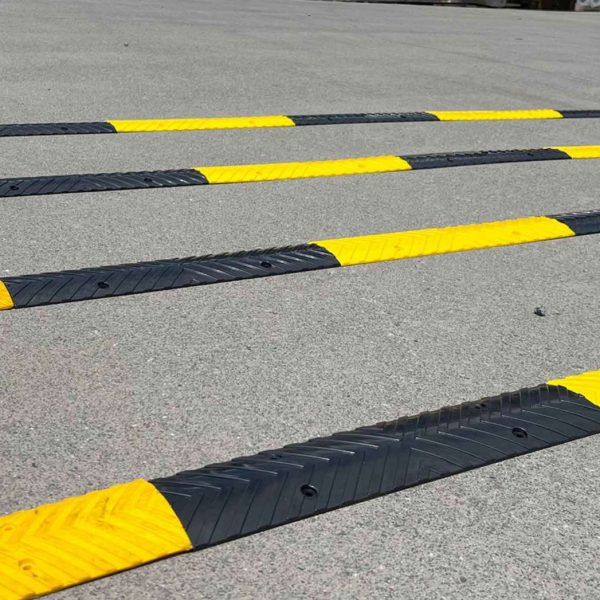
Speed humps are the aggressive ones. They’re usually just a few inches high but only 12-14 feet long, with steep ramps that are meant to make traffic slow down to 10-15mph. Do they work? Absolutely. But are they nice to drive over? Not a chance. Emergency vehicles get rattled, buses get held up, and if you’re going much over 15 you can be in for a jolting experience. Speed humps are best left for quiet residential streets where you really need to slow down – not on busy bus routes or main roads.
Speed cushions try to find a middle ground. These are segmented humps that allow buses and emergency vehicles to straddle the cushion while forcing cars to ride over it. They work okay, but lighter cars get a decent jolt even though they’re not as bad as the full hump, and the gaps can create unpredictable handling.Rumble strips do it a different way. These bumpy surface treatments give drivers a heads up by rattling them around, rather than jolting them up & down, but they’re mostly just warnings rather than speed breakers. Unfortunately they’re a pretty miserable ride for cyclists and so you shouldn’t overuse them near areas where cycling is a priority.
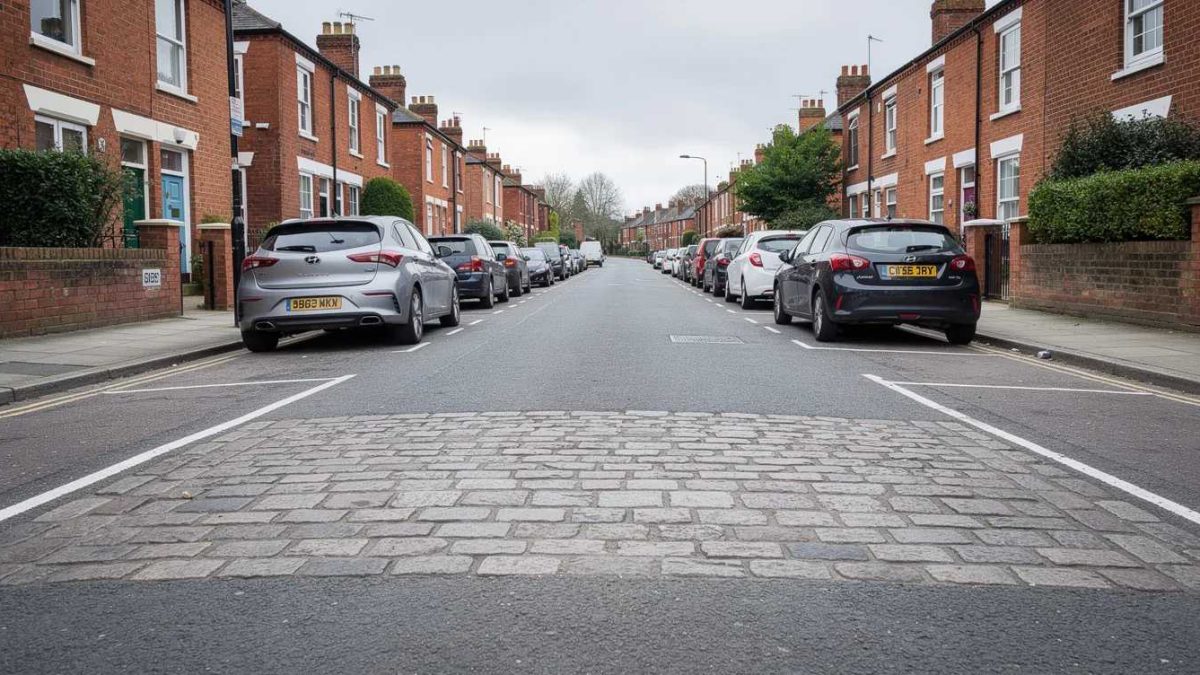
Speed tables are just right. A typical flat top speed table in the UK is about 75mm high, with nice gentle ramps and a flat bit that goes on for 6-7 metres – long enough to make it a decent raised pedestrian crossing. Speed tables work best when the road speed limit is 30 mph or less – and they can really make a difference in slowing traffic down when you space them out just right, usually reducing speeds so that 85% of drivers are moving at 30 kph or less. The spacing – about 40-60 metres in 20 mph zones – keeps the calming effect going without making the traffic into a never-ending up-and-down-as-you-go affair.
Speed tables are a good fit for collector streets, transit routes & busy urban areas, though not so great for major freeways or high-speed roads. They do a good job of supporting speed limits, without being a nuisance to buses, cyclists or pedestrians. When well designed & looked after, speed tables can bring down speeds & reduce crash severity without being overly annoying.
And the reality of it is – speed tables are a lot easier & cheaper to put in & look after than a lot of other traffic-calming measures, while still giving you a decent reduction in speed.
The Physics of a Pleasant Thump: How Design Decisions Turn into Noise
Getting why some speed tables make a great soothing sound & others are just a clattering nightmare requires a quick dig into physics – but don’t worry, this won’t turn into a textbook! Just think of it as understanding why some speakers sound nice & others sound tinny.
Ramp gradient is the main control. A 1:10 ramp at 25 mph produces roughly 0.15 g of vertical acceleration – enough to notice, but not enough to make people wince. The resulting noise sits at around 200-400 Hz, which is what we call a nice low-end thump, rather than an ear-piercing high-pitched whine. Steepen the ramp to 1:8 & the acceleration jumps to 0.4 g – now you’re making a noise in the 1-2 kHz range – the sort of clattering that makes residents complain & car drivers grimace.
The length of the flat bit at the top of the bump determines how your axles hit the road. A passenger car wheelbase is usually 8-12 feet, so on a 6-7 metre table, both axles are on the flat bit at the same time, allowing the suspension to get comfortable rather than bouncing around. If you make the humps too short, the wheels thump in sequence – front wheel thumps, then rear wheel thumps – effectively doubling the noise peaks. It’s like the difference between one nice smooth note & a jarring staccato racket.
When speed humps & speed tables make cars go up, it makes drivers slow down for a bit. But how they do that upward movement is really important – speed tables spread it out a bit so that the suspension has time to get comfortable with it. Most car suspensions resonate at 1-2 Hz, and a well designed table works with that rhythm rather than against it.
Different cars behave in slightly different ways as they hit a table. Light cars go over speed tables in a whisper, their soft suspensions just soaking up the undulations. Buses & HGVs, on the other hand, with their much longer wheelbases & super stiff suspensions, make a much deeper, more resonant noise – a low rumble rather than a clatter. On a 22 foot long table designed for bus routes, it’s not too bad & produces a nice calm effect while still keeping traffic moving.
In 2 real-world examples, residents on side streets with a well-designed asphalt table report the noise is 10 db quieter than an equivalent hump installation – that’s not a small difference – 10 db is roughly halving the perceived loudness. On a bus route with a longer flat bit designed for bus compatibility, the operators report consistent speed compliance without all the service disruptions caused by steep humps.
So the practical upshot is this – every design decision you make – from ramp angle to plateau length to how the transition goes – all write a line in the acoustic signature of the street. Get them right & you get a calm, soothing soundscape. Get them wrong & you get a percussion section nobody asked for.
Asphalt vs Stone: Why the Materials Matter to Your Ears (and Wheels)
You’ve got your geometry sorted & now you need to choose your materials – that’s where the real sound of the speed table comes from. The same shape can sound totally different depending on whether it’s asphalt, block paving or natural stone setts on top of it. Figuring out these differences helps explain why some traffic calming schemes really annoy the neighbors & others are met with a shrug & a ‘oh well, that’s just the way it is’.
Standard Asphalt Tables : the Uninspiring Norm
Standard asphalt tables have to be the most familiar experience going. They actually sound pretty dull – a smooth but unremarkable “thud” when you hit them, followed by a hiss of the tires once you’re crossing the surface at anything above 15-20 mph. Fresh asphalt is around 70-80 decibels – acceptable I suppose, but nothing too remarkable. The problems start to show up as time goes on, though. As the asphalt gets weathered, ruts start to develop, the surface dressing loosens and the chippings start to scatter. Each one of these imperfections adds a bit more noise, but in a random clatter sort of way – and these start to get worse with every passing year. Even five year old asphalt tables often end up sounding a whole lot worse than they did on the day they got installed.
Block Paving : a Midpoint
Block paving is somewhere in the middle. Rectangular pavers laid out at a fairly consistent height give you a bit more control over the surface than the haphazard mess of asphalt, which deteriorates over time. The joints between the blocks add a bit of texture – a kind of granular undertone at lower speeds – but it’s not too harsh, not like some of the poorly laid stuff out there. For pedestrians and cyclists, the regular surface is pretty predictable and stable.
Surface Treatments : Not Always the Answer
Surface treatments like rumble strips and textured pavements can actually slow people down but they can be pretty uncomfortable for cyclists and really should be used with a bit more care than they often are. If the surface is over textured, it can actually create more noise and can even destabilise two-wheeled road users at certain speeds.
Natural Stone Setts : the Quietest Option
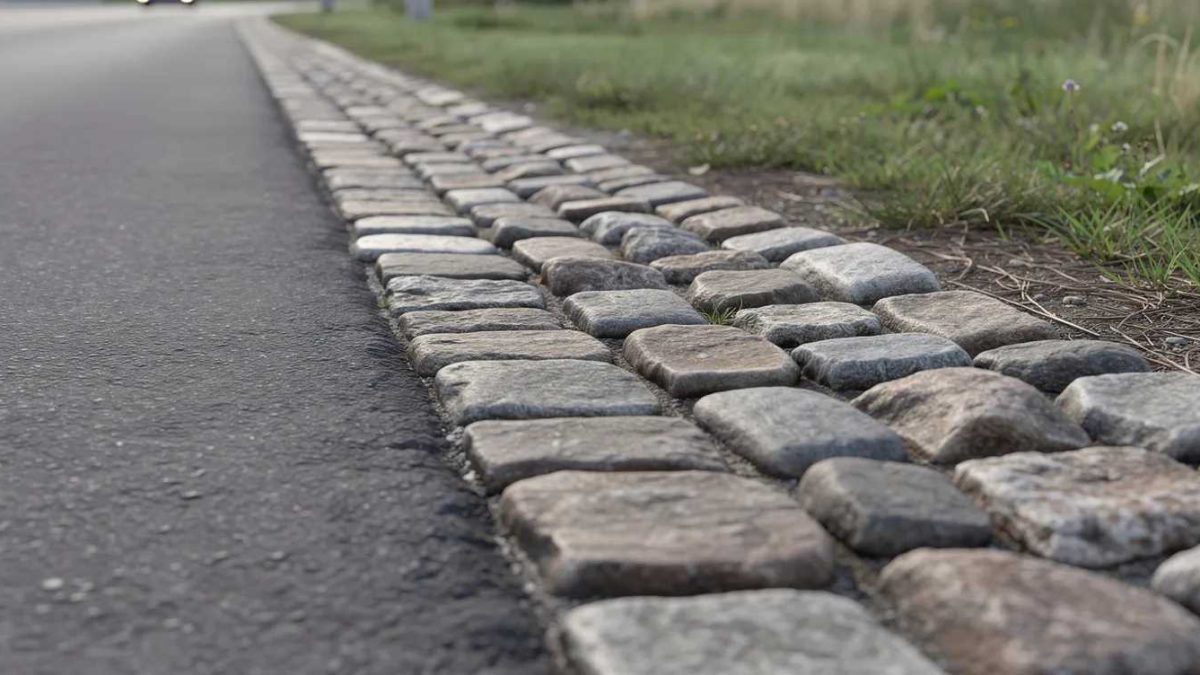
Natural stone setts – granite or similar hard-wearing materials – create the most distinct acoustic character out of all the options. At low speeds (below 15 mph), properly laid setts can produce a textured, granular sort of rumble in the 50-70 decibel range – actually quieter than fresh asphalt at typical approach speeds. Then as you cross the surface, the sound fades to a gentle hiss – and then rumbles softly again as you exit.
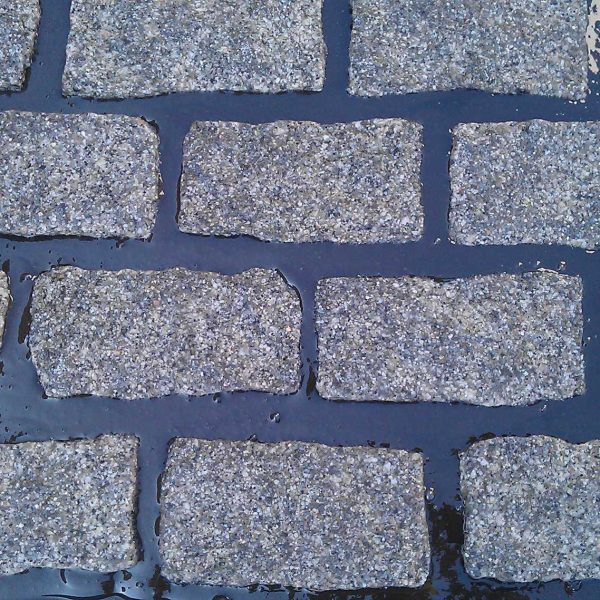
But material alone isn’t enough. The way the bed is done – and the spacing of the joints – determines whether you end up with a controlled rumble or just an annoying clatter. Tight 5-8mm mortar joints stop the rattling you get with loose joints. Even stone heights – no more than 5mm variation – stop the jolting that makes prams jump and cyclists wobble. A badly laid granite surface can produce 10-15 dB clatter spikes that completely negate any acoustic advantages you’ve got.
Good construction matters almost as much as the material choice. A well laid granite sett table will stay quiet for 20+ years. A badly installed one will be clattering from the word go and will get worse as the stones shift. The long term winner, acoustically and financially, is often the one that costs more upfront but doesn’t need constant repair.
Cobbled Speed Tables : the Surprisingly Quiet Good Guys
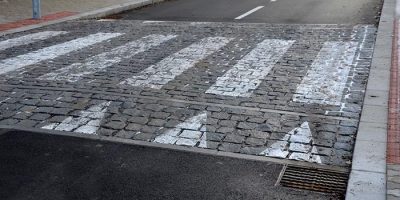
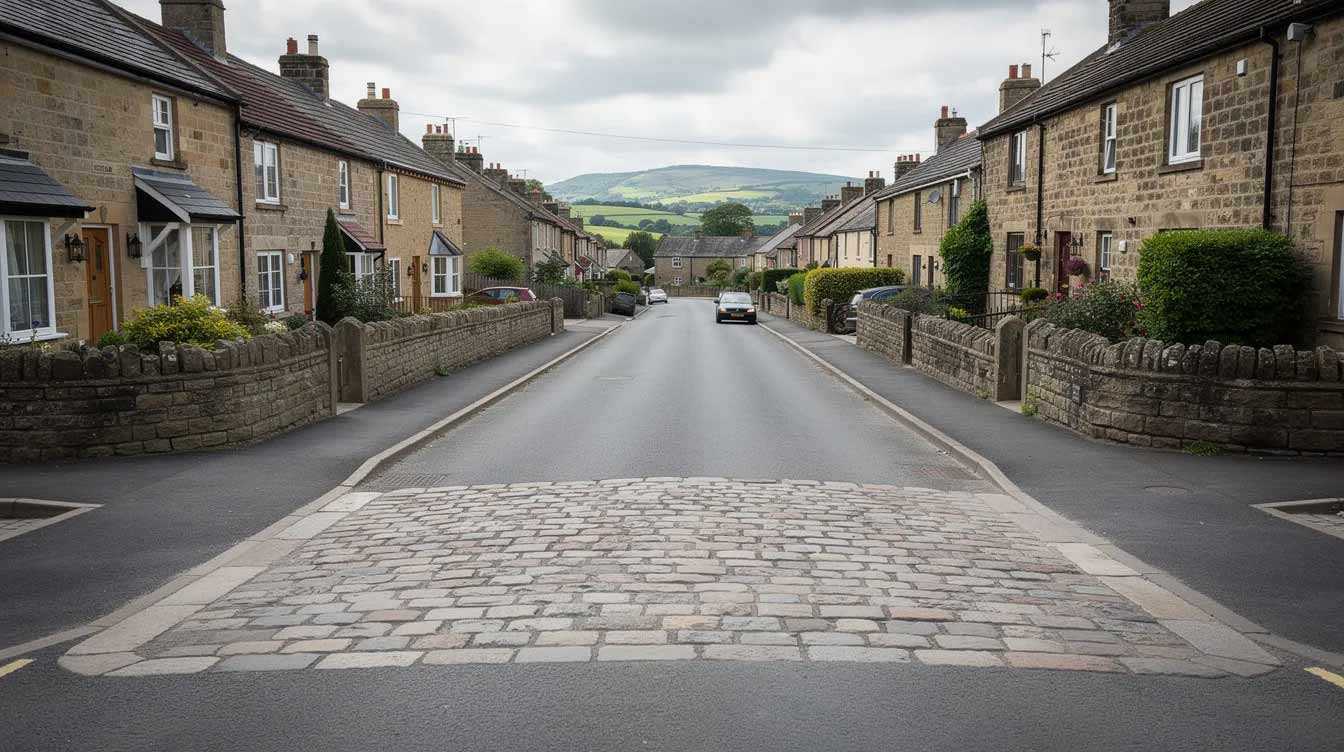
Now here’s a claim that might surprise you : well designed cobbled speed tables (that’s natural stone setts laid on a solid base with proper jointing) are often the best solution for combining noise reduction, aesthetics, and effective traffic calming. They’re quieter than cracked asphalt, more durable than painted markings, and they actually look like they belong in a place rather than being imposed upon it.
The acoustic benefit starts even before drivers get to the table. There’s just something about a visible change in road surface (like shifting from smooth tarmac to textured stone) that triggers an instinctive braking response. UK studies show that drivers start slowing down 50-100 metres before reaching the cobbled feature, approaching at 15-20 mph rather than the 30 mph rush that is common with asphalt installations. By the time tyres meet stone, the aggressive thumps have already turned into gentle, low speed rumbles.
Quality granite setts on a 100mm mortar bed with staggered bonds produce a controlled noise in the 60-70 decibel range – significantly lower than the 75+ dB peaks you get with deteriorating asphalt. The stone absorbs vibrations better, creating lower NVH (noise, vibration, harshness) for residents in adjacent areas. Where cracked asphalt humps clatter with every passing lorry, well-maintained setts murmur.
Aesthetics and the Cobbled Look
Aesthetics run far beyond just the way it looks – though the cobbled look is a big part of it. Cobbled speed tables actually signal that you’re in a “place” not just a road. On historic high streets, village gateways, residential squares they add visual interest while doing a functional job. They denote pedestrian priority through tactile and visual cues rather than aggressive signage. Street furniture and parked cars just seem to fit in better with stone surfaces than they do with the harsh black-and-yellow contrast of painted asphalt humps.
Safety and Comfort
Safety and comfort advantages just follow from good design. Flatter tops give you a more predictable surface for pedestrian crossing, wheelchair users and cyclists. Flush kerbs eliminate trip hazards. Minimal joint upstands prevent the lateral jolts that make mobility scooters uncomfortable. It just feels safer because the environment feels like it’s been designed for people not just to constrain vehicles.Consider a concrete example. In 2024 a market town in Gloucestershire traded in five blacktop speed humps for granite sett speed tables on its main street. Local Council data showed an eye-catching drop in speeds from 32mph to 21mph – a pretty impressive reduction. Noise complaints from nearby properties though fell even more dramatically – by a massive 70%. Residents made a point of saying that the change was great “now we can finally keep our windows open on summer evenings.” The tables are expected to last 20 years+ with hardly any extra maintenance – a big deal compared to the five year repaving cycles the asphalt they replaced required.
Designing a Cobble That Won’t Grate Your Nerves
Crafting a quiet cobbled speed table needs a focus on specs that might seem minor but actually make a huge difference. The Department for Transport’s Local Transport Note 1/07 has got the lowdown on the design and implementation of speed tables in the UK, and its principles are extra relevant when it comes to stone surfaces.
Designing beautiful speed tables so they don’t make too much noise and don’t cause too much disruption is super important. Some standard dimensions include a height of 75mm and a length of 20 feet. For cobbled tables, the best gentle ramps have gradients around 1:12 to 1:15, which spread out the acceleration over 6-7 metres rather than making the vehicle jump abruptly. Steeper gradients just make rolling motion turn into loud noises – exactly what you’re trying to avoid.
The Department for Transport’s Local Transport Note 1/07 says speed tables need a minimum plateau length of 3 metres to work effectively as pedestrian crossings, and 6 metres if they’re a formal crossing point. On cobbled installations, the longer dimension helps stop the textured surface from being uncomfortable at normal crossing speeds.
Just how the ramp meets the surrounding carriageway is important. Big smooth curves of at least 500mm radius stop tyres from “bouncing” onto the stone surface. Sharp edges create as much noise as the rest of the table does, regardless of how quiet the rest of it is.
How you specify the joints is crucial – aim for joints that are only 5-8mm wide, filled with sand for a bit of extra flexibility. Mortar-locked joints in high traffic areas prevent shifting but need careful installation to stop them cracking. Stone sizes of about 100x100mm in a herringbone or staggered bond pattern provide stability while spreading the load evenly.
Speed tables can be a right nuisance for road drainage systems – you need carefully designed drainage solutions to prevent pooling. For cobbled tables, a crossfall of 1:200 and perimeter channels stops water collecting. Standing water makes a huge difference to the noise level – and it also causes the setts to shift over time, which is just what you’re trying to avoid.
Finally, avoid having height differences of more than 3mm between adjacent stones. Cyclists and pedestrians are super sensitive to irregularities that drivers never even notice. At 15 km/h a 5mm lip can cause a 10% stability loss for a cyclist, which is the kind of wobble that puts them off riding.
Find out more about speed tables here.
Beyond bumps: How Speed Tables Fit into Modern Traffic Calming
Speed tables aren’t a one-trick pony. They are part of a whole orchestra of effective traffic calming strategies, working alongside other physical measures and non-physical measures to create streets where vehicle speeds naturally match human priorities.
The rights and wrongs of traffic calming comes down to the law. The Highways Act 1980 sets out the fundamental powers and duties of highway authorities in England and Wales, providing the basis for the construction of traffic calming works, including speed tables. The Road Traffic Regulation Act 1984 governs the making of Traffic Regulation Orders (TROs), which are often required alongside speed table schemes to implement or reinforce speed limits and regulate traffic behavior – you need to understand both frameworks if you’re implementing traffic calming schemes.
Physical measures are split into two broad categories. Vertical deflection – speed tables, speed humps, raised junctions – forces vehicles to slow through surface changes. Horizontal deflection traffic calming measures – like road narrowing – forces motorists to slow down by altering their travel path, making them drive more carefully around turns. Chicanes narrow the roadway, creating a zigzag path that slows vehicles down by forcing them to change direction. Central islands can serve as pedestrian refuges and are often used in conjunction with other traffic calming measures to enhance safety at crossings. Kerb build outs create narrow traffic lanes that require drivers to slow and give way.
Non-physical measures complement the hardware – speed limit signs set out the rules, vehicle activated signs provide real-time feedback, and achieve 20-30% extra speed reduction when combined with physical measures. Advance warning signs warn drivers of what’s to come. Road markings show priority at crossings. Campaigns and enforcement are the icing on the cake, but evidence shows that physical measures are what really make the difference, producing reductions that last, while signage alone typically produces only 5-10 mph temporary drops.
The Statistics Support Investing In Making Our Roads Less Stressful
Traffic calming measures can make a massive difference – they’ve been shown to cut accident rates by as much as 40%, and when it comes to the severity of those accidents, they really do make a significant impact. A study of 91 traffic calming schemes that were put in place between 1997 and 2002 showed that they reduced road collisions by 13% and fatal crashes by a whopping 52%. In New York City, safety upgrades on major routes resulted in 6% fewer accidents involving pedestrians in areas that got the upgrade compared to similar areas that didn’t – the city’s Vision Zero policy being the driving force behind this.
And it makes all the sense in the world that reducing speed would cut down on speed related crashes – those are the ones that are most likely to be really bad news.
Now, speed tables are something you’ll often see in high-risk areas like school zones and residential streets, as a way of saying to drivers ‘slow down, we’re entering a lower speed area’. They’re particularly useful in specific parts of the network, like:
School entry points – they can make a big difference. A pilot scheme that was run in Marysville, Washington in 2017 showed that using speed tables to control speeds near schools could reduce excessive speeding by up to 50% when compared to using traffic circles.
Village gateways are another good place for them. You can get a real psychological effect from a combination of a visual and tactile experience – plus a few other tweaks, like narrowing the road. This has been shown to cut down on cut through traffic in UK studies by up to 40%.
Side roads are another area where raised tables are being used to make it safer for pedestrians. The idea is that by giving pedestrians priority and reducing traffic speeds you can create a much safer environment.
Residential areas that get really overwhelmed with traffic can benefit from speed tables. Studies have shown that if you put a series of them in place, traffic speeds will really come down, and stay down.
But – and there’s always a but – there are costs to consider. Speed tables can cost anywhere from £6,000 to £15,000 each to install, depending on the design and what materials get used. In the UK, the cost of a single hump is around £700 to £1,000 to install, but that’s just for the hump itself, not the signs and the lighting. In the 80s the Dutch were spending up to £25 per square metre on traffic calming schemes – which is one of the reasons why speed tables became so popular – you can get a lot more bang for your buck.
Emergency services and bus operators have historically had a problem with traffic calming schemes – but speed tables are different. They’re gentler on vehicles, so you don’t get delays on the route, and they’re also smooth enough for ambulances to keep to speed.
For people who ride bikes, or horses, speed tables can be a godsend. They provide a smooth ride that’s not going to destabilise you – and you get predictable surfaces.
The Streets of 2030 Won’t Sound the Same
Traffic calming is changing – and speed tables are evolving with it. We’re seeing speed tables that can track drivers and provide immediate feedback to those who are speeding. They can even measure traffic volumes, and average speeds – and adapt to the situation.
The way they’re built is changing too – modular construction is becoming more popular. You can build a speed table, then take it down and reconfigure it if the traffic patterns change. It means you can adapt to changing needs, and reduce waste in the process.
In the future, speed tables won’t just be seen as obstacles to be got past – they’ll be seen as deliberate signals that we’re trying to make walking and cycling safer. We’re shifting the way we think about what streets should look and sound like – and speed tables are a key part of that.
And with more and more electric vehicles on the road, you can expect to hear more of the noise that the tyres make as they go over the road. The good news is that with properly designed speed tables, you can actually make the whole experience a lot more pleasant – by making sure the surfaces are smooth, and the geometry is right.What About Autonomous Vehicles? Connected and Autonomous Systems ‘ll Still Need to deal with physical presence – human road users have to have some idea what to expect from traffic behaviour. A street that relies purely on digital signals for speed management wont feel safe for people crossing it – after all, digital systems can only promise to keep people safe. Physical presence – in this case, speed tables – provides a bit of truth that digital systems can only promise.
Trend predictions are saying there should be a 30% rise in natural stone sett installations for traffic calming by 2030 – all because people are demanding “human streets” that are not just functional – but a place where people want to be. Locals are increasingly expecting road safety measures that look nice and dont create a racket. Cobbled tables meet all those requirements.
The most successful streets of the future are going to be the ones that are quiet and look it. A well designed speed table will give you that quiet rumble – a sort of pleasant murmur as vehicles go over them. Thats not the jarring thump of a badly made speed bump, but more of a controlled, rhythmic noise that signals a place where people are the priority.
Conclusion: When a Gentle Rumble Means the Street is Working
There’s something really lovely about a well designed speed table. Not the thump-thump-thump of a traffic calming disaster – but that reassuring, low murmur. That sound tells you a place has been designed for comfort, safety and being a human place.
The material choice makes all the difference – cobblestone speed tables that have been designed properly can reduce noise at the same time as looking great. Proper geometry matters too – the gentle slope, the nice plateaus and smooth transitions that turn a bump into something you dont mind. And then there’s the details – how tight the joints are, how consistent the heights are and what kind of drainage you have. If all these things are right, the road users will accept it, rather than complaining.
The next time you go over a speed table, have a listen. If you get a thwacking noise – you’re crossing a bit of traffic calming that is not really doing its job – it’s fighting against the people it’s supposed to be helping. But if you get that gentle rum-rum-rum – it’s a bit meditative – a comfortable noise – you’re on a street where the infrastructure is designed to calm you down, not just the traffic. Speed tables arent just bumps in the road; they’re the soundtrack to a safer more liveable place – and the best ones say very little – they whisper. And in that whisper, you know what kind of street you’re really in.